Supply Slide

‘To stiff a virus in mid song,’
clinicians say, ‘cannot be wrong.
So by extension it is we
whose work will set the planet free.’

‘No, by best logic it is us
(your ‘we’ is twee but who’s to fuss),’
say engineers, and build a road
as killing field for cat and toad.

‘We make the vehicles, their lamps,
refueling stops, and maintenance camps
so humans can ride roughshod through
the habitat of owl and shrew.’

‘With our aid fools can forests fell,
inverting lines that used to swell
with fair-caught trout. They are no more
now we’ve made nets and heavy bore.’

‘A piece of Heaven with a beach
was not beyond our tankers’ reach.
To those who washed the birds in answer
we sent a friendly warning: cancer.’

‘No, not warn thém. They all will die.
The warning’s for their friends who cry
and for their children left alone:
the world is ours hours to own.’

Clinicians treat the engineers
for nightmare, lower-colon fears,
and for their failing faith that they are right
to hide the stars with manmade light.

These same clinicians, when they quail
at questing for the Holy Grail
of killing other forms of life
go kick a cat or take a wife

or husband as their own advisors
and when that fails, hire advertisers
to put a better spin on things
and blow expensive smoke that rings

the bug-free swamps and empty fields
with figures of fantastic yields
of crops that look superbly neat
and that sport a shelf life you can’t eat.

The advertisers takes the wages
that they are paid to serve as sages
and buy furred robots, shiny cars
and sell us colonising Mars.

Menelaus

I should have lied when Helen took my hand
and asked me quietly did I want to see
her room. She said her parents were away
and I said yes and followed up the stairs
and down the too-wide corridor to where
we stopped at nothing but an open door.

We stopped there too, and kissed, and time ran hot
and hurled us through the door and through the room
to stand beside the window and look out.

Look out, she said. This is my father’s realm.
It runs down to the river and beyond
those tumbling waters up that harrowed hill.
My father received this as a gift. To work.
He’s worked it up, and when he starts to tire
he’ll pass it on to me and to my man.

Are you that man? she asked. I should have lied.
Instead, I said I was and asked if this
window where we stood was of her room.

No, she said, here’s where my parents sleep.
We walked back through it then, climbed further stairs
and trailed our hands along a banister
she said the servants waxed three times a year.

We reached a landing. I reached in her dress
and she resisted after a short while
and we went further than we’d gone before
but stopped again. I tried to hide my pain
and made a joke, I don’t remember what.

Dó you, Helen asked, have rooms like this
where you live? Nó, I did not lie, we don’t.

She let me enter, shoeless. I was scared.
Scared I’d sneeze or something and she’d laugh.

Je t’adore, she said. I locked it too.
We acted like we did not hear the click.

My father’s rich, she said, are you so tired?
Come over here, let’s play like we’re asleep.

I played I had control. I tried to count
my heartbeats and not think about her breasts.

A thousand miles downstairs a ringing bell
persisted ringing every time we moved
and peacock sentries on the upper lawn
cried warnings I alone was cursed to hear.

And Helen took my hand. I almost died.
The sun came up three times in half an hour
and I learned Heaven’s not that far away.

A small cloud passed her window and returned
then fell like feathers, landed on the strip
that separates their stables from the pool.

Her father, back from Paris, looked our way
and disappeared. I heard him in the hall
and on the lower stairs and then on hers.

I hurled my clothes and shoes and then myself
out Helen’s window. On the balcony
I met her mother, massive and composed.

Son, she called me. I put on my clothes.

I work here now, for Helen, on her farm.
I have my own rooms. I don’t see her much.

The few times we pass each other I look and think
she once was pretty, on that fateful day
that she asked me up and I forgot to lie.
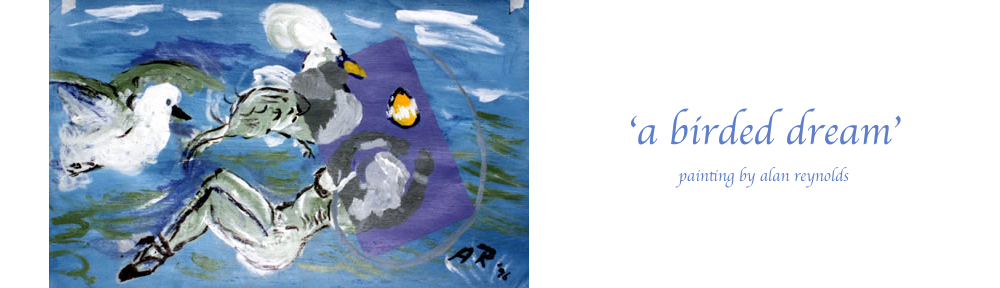
Beliefs and Creeds of Horses and of Dogs

Of the creeds of horses and beliefs of dogs,
I claim no knowing—only this:
they ponder mine as little as I ponder theirs.

Even here, in this, I am shaky, ignorant.
Knowledge, fleeting as always, escapes me now,
and the themes I grasp leave me cold in the autumn

of this perfect day, free and out of work,
not the slightest bit confused on which is which.
The waitress frees the chained-together chairs.

I choose the best chair, how we humans know
a mystery to the only other souls:
the tourist horse and the dissipated panting dog.

The others—there are no others here—
I cannot see, but I admit their presence
and fear I may in my ignorance offend them,

fumbling phrases, doubting their rite:
which serves as wafer, which as wine.
The waitress brings me fresh orange juice. I wait.

‘What heavy thoughts,’ the lying dog must think,
‘occupy the draught horse, dreaming its fly whisks,
avoiding whinnying except when part of the service.’

A man in shorts, cap, and camouflage shirt
ascends the eight, marble, steps next door
and goes inside, the horse seems sure, to hosannas.

It is early and with no custom, and the chef himself
provides me, seated outside in the best chair,
my fish and loaf while I turn at the sound of hooves

behind me, across the Prinsengracht, where barks
pursue the horse, mane damp with the city’s weight,
propelling, by pulling, a cart of intentional tourists.

A dove, conspiratorial and keen,
settles in the chair beside me, murmurs,
‘Where does all this lead?’—not kindly, but slyly.

I give him thoughtless invective, the only kind
that counts against me. Father, I have sinned.
The sun blinks out; the phantoms fold into shade.

They, the dog and the draught horse, reappear
on the tales of clouds resuming autumn coverage
of the best chair, mine. Guests arrive.

Each claims the best chair as her throne,
silent as we feast on separate truths,
while the dog and horse dream far beyond us.