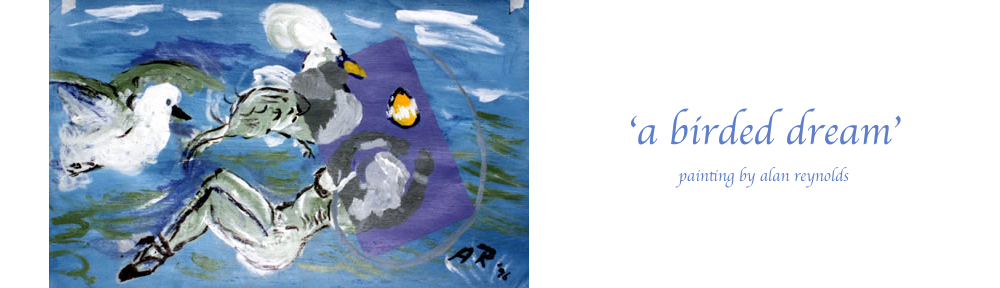
Menelaus

I should have lied when Helen took my hand
and asked me quietly did I want to see
her room. She said her parents were away
and I said yes and followed up the stairs
and down the too-wide corridor to where
we stopped at nothing but an open door.

We stopped there too, and kissed, and time ran hot
and hurled us through the door and through the room
to stand beside the window and look out.

Look out, she said. This is my father’s realm.
It runs down to the river and beyond
those tumbling waters up that harrowed hill.
My father received this as a gift. To work.
He’s worked it up, and when he starts to tire
he’ll pass it on to me and to my man.

Are you that man? she asked. I should have lied.
Instead, I said I was and asked if this
window where we stood was of her room.

No, she said, here’s where my parents sleep.
We walked back through it then, climbed further stairs
and trailed our hands along a banister
she said the servants waxed three times a year.

We reached a landing. I reached in her dress
and she resisted after a short while
and we went further than we’d gone before
but stopped again. I tried to hide my pain
and made a joke, I don’t remember what.

Dó you, Helen asked, have rooms like this
where you live? Nó, I did not lie, we don’t.

She let me enter, shoeless. I was scared.
Scared I’d sneeze or something and she’d laugh.

Je t’adore, she said. I locked it too.
We acted like we did not hear the click.

My father’s rich, she said, are you so tired?
Come over here, let’s play like we’re asleep.

I played I had control. I tried to count
my heartbeats and not think about her breasts.

A thousand miles downstairs a ringing bell
persisted ringing every time we moved
and peacock sentries on the upper lawn
cried warnings I alone was cursed to hear.

And Helen took my hand. I almost died.
The sun came up three times in half an hour
and I learned Heaven’s not that far away.

A small cloud passed her window and returned
then fell like feathers, landed on the strip
that separates their stables from the pool.

Her father, back from Paris, looked our way
and disappeared. I heard him in the hall
and on the lower stairs and then on hers.

I hurled my clothes and shoes and then myself
out Helen’s window. On the balcony
I met her mother, massive and composed.

Son, she called me. I put on my clothes.

I work here now, for Helen, on her farm.
I have my own rooms. I don’t see her much.

The few times we pass each other I look and think
she once was pretty, on that fateful day
that she asked me up and I forgot to lie.

Coronation

What can the women say about the pails
of beer the sexton’s ordered me to place
at intervals around the cemetery?
As little, I imagine, as they said
about the naked lodger at the parson’s.
They as a rule are not that much for words.
They keep their counsel, keep their clothes on till
Dionysus commands nocturnal presence
and suddenly at the bottom of the hill
there’s only sexton, pastor, churchyard, me.

Their music, scarcely audible down here
to humans, makes the dogs crawl under beds
and beer that had gone flat among the headstones
gains body and a modicum of froth.
What tourists think are fairy lights ignite
the ridges, and another young man’s missing.
Returning women rinse their faces clear
and walk unseeing past us to their beds
and dogs come out and stretch and sniff the breeze.
The one I throw a stick for bites the sexton.

The sexton tells me I can have the pails,
says there was no naked lodger. I go home
and smell the day-old beer, avoid the bed.
Dionysus has weathered leaner times.
A garland and a heavy, pointed stick
and pieces of a cat lie on the hearth.
I can’t abide the smell of fires gone out.
I hear the parson outside, softly crying
and saying were the candles here on time
there would be no women sleeping in today.

The sexton’s answer’s mumbled and I miss
what held delivery up; a washed-out road
was blamed the last time. We don’t have police.
One woman does the laundry. One pours tea.
The one who never would return my gaze
stares at me till I blink. She takes my hand
and leads me to the parsonage where mead
and meat and biscuits and a ruby wine
are given to me, and a splendid room.
She asks for and I give her all my clothes.

What the Three Fates Witnessed

There was little to say at his christening. We said it again.
He breathed. He was noisy. His minders hoped he would have friends.
‘Or not,’ we whispered as his minders took him back home.

There was little to say at his weddings. We said it again.
His brides mostly smiled. His best men were maybe his friends.
Or not, we had noticed. It was eventually just he who went home.

There was little to say at his burial. We added it up:
his occasional successes, how he had longed to have friends.
None were there that we witnessed. This time he did not go home.

Threaded

‘Try to relax,’ says Guide Number 1. We watch the entire world ending.
‘Not all of the world,’ says Guide Number 2. ‘Just all the life that is on it.’
‘Not even all life,’ says Guide Number 3. ‘Only the species depending
on plants for food or for their food’s food.’ To us it is way past ironic

to sit stock still and watch Earth burn. There must be a way we can fix…
‘What you broke,’ say all three Guides in chorus, too-easily reading our thoughts.
‘You began small like birds, building modest nests with found bright stones and sticks
but progressed, that’s the very wrong word, to mess with missiles and dreadnoughts.’

‘Not all of us!’ we shrieked (here ‘shrieked’ is the very very right word).
‘We, and many like us,’ we whined, ‘adhere to the venerable thesis
of live and let live.’ Guide Number 2 said, ‘Do not be absurd.’
Guide Number 2, we knew, when we knew, was actually Lachesis.

She took our measure, of each of us, meaningfully waving the rod
we had hoped she had forgotten to bring. Clotho (her sister, Guide 1)
gave Atropos (Guide Number 3) a weary dooming nod.
Clotho vowed that in times future if any she would shun

spinning life threads for human people. ‘They are irredeemably bad
for themselves, for us and for ‘Gaia’ — whatever you want to name it,’
she said. She looked for an immortal thoroughly hauntingly sad.
‘They inherited the Earth but soon misused their growing powers to maim it!’

said Atropos. She smiled softly then. A Fate’s smile is disarming.
Could it be that our fate that threatened simply disappears?
We smile back. We try to laugh. The planet keeps on warming.
Then we see that Atropos is sharpening her shears.

We forget again, forgetting our Guides’ — these three dire Fates’ — true names,
and then from fright we forget our own. There is nowhere we can run.
The shears’ edges spark. Our threads spew smoke. Our souls go up in flames.
The Guides count down, the last thing we hear: ‘Three’ and ‘Two’ and ‘One’.

Zipping Along Until

In the rough dangerous waters surrounding Charybdis and Scylla,
unlike the approaching sail-and-oars ship of Ulysses,
I do not need wind or muscle. I steer my Zodiac
powered by monstrous diesel motors that roar
haughtily and aggressively. The gods
themselves recoil from this din of modern men
then recover and melt the blades from my propellers.

Censored by Carpentry’s Inventor

‘Perdix flew wing on our fishing expedition.’
My song’s first line makes Daedalus cry ‘Halt!’
He fears, and rightly so, instant perdition
were the world to learn that it was through his fault
that his nephew died. He stifles each rendition
of lyrics mentioning Perdix or how he bought
the farm while flying vertically straight down
(which is why partridges fly close now to the ground).

Which Rock

They ask him one more time: Which Rock do you worship?
His answer chokes back when they draw their swords.
Not seeing them or him, girls walk small dogs.
A fly lights on his leg, points to one Rock.
A wave recedes and shows the Rock’s insignia.
Or was that shadow? He will get one guess
as to what’s accepted doctrine on this beach
so far from where he thought he’d started out.

He sees sky above the clouds above the swords.

Women washing windows of the restaurant
see him but not the fly. They see walking girls.
They see tiny jacketed dogs. They don’t see the men:
the men in mohair robes who point bronze swords
at approximately where he’s been told that his heart is
or was before he lost it on this beach
to a girl who walked small dogs that disappeared
when the tide rose and the brave Rocks in the shallows
became hidden, serving only to sink boats
like his that time he sailed here on his own
which is how he’s ending up. He hears, Which Rock?