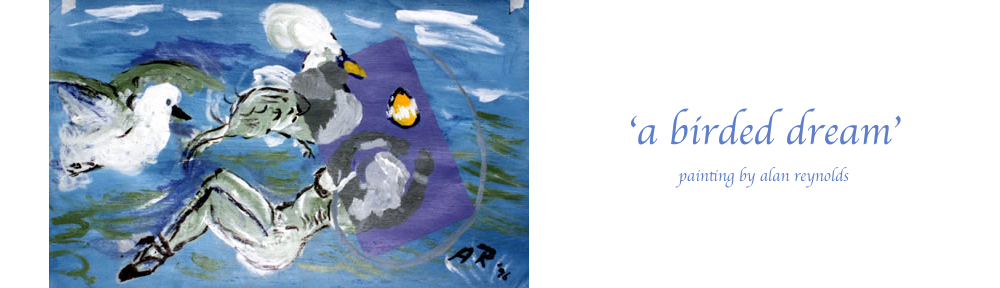
How Chickens Count

When Annie Mae was very young
she counted on her toes.

She scratched her ciphers with a stick
in dirt in careful rows.

Her mother’s cockerel Chanticleer
would join her in her fun.

He’d hop about and crow a bit
when she wrote down a 1.

‘2, 3, 4, 5’ she counted on,
and then the other foot:

‘6 and 7, 8 and 9.’
Now what should she put?

‘1 set of toes, 0 extras left’
the rooster told a hen

and Annie Mae, who heard him, smiled
and wrote a great big 10.

‘It’s my turn now,’ the cockerel crowed.
They all looked at his feet.

‘Scratch it out,’ laughed Annie Mae,
‘We’ll read it if you’re neat.’

‘1’ he counted, ‘2 and 3.
I see I’m getting near

to 4. That ends my big left foot.
My right foot starts right here.

Here’s 5, and 6, and 7. Good
One toe to go. No! Wait!

Don’t tell the answer, Annie Mae.
Don’t grin like you just ate.

1 set of toes, 0 extras now – –
the same as you, my friend!’

Young Chanticleer was proud as punch
as he also wrote 10.
Lemon Hill

Lemon Hill was published in The Armchair Aesthete, Issue 16, Summer, 2001

The poor and lame climb up this hill when the fruit begins to grow.
The going blind watch from the shade and squint at April’s glow.
When flowers finish blooming and the rain pails them away,
petals pour down darkling hills and pollen swims the bay.
In May the buds begin to swell, accelerate their slow
chill winter’s start and form gold orbs absorbing sun in rows.

June’s sun bakes shade from leafy trees where turgid spiders spin
the webs they lime to catch their prey that had its own chance when
down in the roots the fly-nests blew, and the buzz that blind men hate
teased sighted heads as flies laid eggs in eyes, to incubate.
July sees owners mend the wires delineating groves
and joke with wide-eyed pickers who’re returning here in droves.

The healthy climbers harvest two to the blind or cripple’s one
as all hands strive together in the sweltering August sun.
Hands reach up where the branches fork, and arms stretch down to throw
ripe lemons in reed baskets with a braggadocio
that helps them harvest money now, to live on when it’s slow
and dulled eyes shine reflecting back when fruit began to grow.

West of Blue Ridge

I was born in Carolina
where the mountains addressed Heaven
by its First Name and the rivers
fell and foamed the fish within them
while the trout fed on the mayfly
and the currents cleansed deep pools.

Wagons could not crest the high pass
we walked over, waking groundhogs,
as we crunched to school each winter
morning while the hoarfrost harried
apples from the freezing branches
in the orchard of our neighbor.

We spoke English old when Johnson,
changed it little but defined it
in his dictionary written
a century after we crossed oceans
seeking purchase in Virginia;
pacing, Piedmont hills behind us,

till the mountains rose around us,
lifted up our souls in singing,
taught us solace of the ridges.

Running water turned the wooden
blades I made by splitting cedar
into shingles and affixing
them in forms of fixed gyration
that contrived to take rotation
from the creek and turn our millstone

grinding cornmeal, grinding flour,
while we spun our lives in tales,
mountain backdrops: pirates, whales.

Dressed Academically

I had spent the day rereading Reinhold Niebuhr.
The skies, appropriately a deadly grey,
were curtaining Spring, who, like a troubadour
withholding song until his patrons pay,
was silent, and I, chilled, went on a tour
of friends and pubs and places one can play
a parlour game, or undergo confession,
or in some other way combat depression.

The fifteenth stop, if there had been that many
(it was I thought the last for me till dark),
brought me, detouring, leagues south of Kilkenny
and to the coast: rude boats, a little park
and a rugger pitch deserted as too fenny.
I thought I saw a dragon disembark
from the furthest boat, but it was nearly dusk
and hard to see, or care. All was subfusc.

Finally

Poetry lightens shuttered hearts,
engages jaded minds.
Its lines illuminate cold nights,
ameliorate hot days.
It celebrates the best in us,
retells that till it’s true.
Forever here until it goes,
each poem preserves its space
in thoughts as visible as wind,
as loud as falling snow.

Thunder Like Music

Home from the towers hiding suit go in village
big shirt and jeans custom scuffed leather boots
Rolling Stone issues with O’Rourke a must read
Punch in the great years of editor Cohen
seeming like old Times humour now gentle
music like thunder on bridges on way home
after smoke after taste faux friendly noise
bars well known and never forever returning
grimaces stranding in stand in emotions
first light not all right quick love making all right
off in a daze breakfast snack bars and papers
up in the tower a suit among peer groups
and papers those always and budgets and bytes
random lunch restaurants over tipped waiters
cars for the trip back and tipped back and snoring
next morning meetings prepared for and boring
systems arising and changing the world
ways not imagined or cared about much
systems devised cause we could and we did
we can and we do it we do it again
thunder like music it’s all rock and roll.

Staged Fright, a play

It could be worse, unlikely as that seems.
We have paid to watch an angry woman talk.
We get more than we’ve bargained for: she screams.
About unfairness. She says choices stalk
and mess her up. She says she tires of Free.
She strides unlady likely on the stage
demanding Structure, hating Sartre. ‘He,’
nonstop she’s shrilling, ‘has saddled me with rage!’
I could ask how, but fear that would incite
her formulation of a louder answer.
I cannot stand to sit here stunned all night.
There is mostly monologue, no song, no dancer.
I watch my watch and realise some days
the ticket’s not the only price one pays.