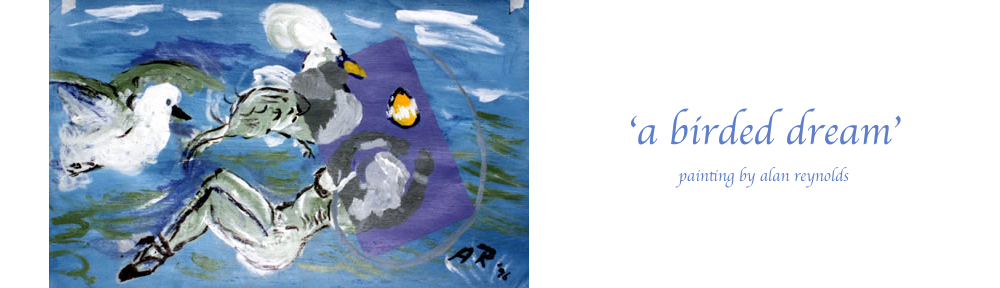
It had been five years almost to the day, and still they remembered the ashes. The terms of his will had been obeyed. His ashes, separated by weight into equal portions, had been spread on the pavements in front of each of his three wives’ houses.
The ashes had long since blown away or tracked indoors. Better not to think much on it—go on living and remember him the way he is; that is, not at all.
The children, some his by birth and others by mutual affinity, saw each other rarely.
The strangeness of running into each other caused them to wonder what they had in common and imagine it was him.
It was a false imagining. No one had ever known him in a way another did. He had been a spirit mirror, not to cheat or change anyone—especially not himself.
He existed only in relation to those he loved. He had been a mirror for each of his wives’ spirits. One remembered him laughing at dawn in hides waiting for spoonbills. One still reached for legal arguments she knew he’d enjoy. The third kept the daube mouton recipe they had developed together.
A son who enjoyed being difficult remembered him as a high-flying mental buddy. A daughter remembered him as an enthusiastic follower of the sport in which she excelled.
His father had died when he himself was very young. He worried all his life that he had failed to do something—he didn’t know what—that would have kept his father alive.
His mother sensed other people’s feelings. He observed their interests.
She knew he was observant. She asked him did he not feel horrible about poor old Mrs. Cazel’s fall in her hen house? Didn’t he feel wonderful about Mr. Jones’ winning a holiday for his family?
He had not. He had had his own feelings and emotions—about girls, and fantasised heroics.
He enjoyed mirroring. It pleased him to try on another person’s habits, the way an actor enjoys a new role.
Those he had liked enough to mirror remembered only the reflection of their own spirits.
I wonder if he ever knew whether he liked it.
Mirror Spirit
1

