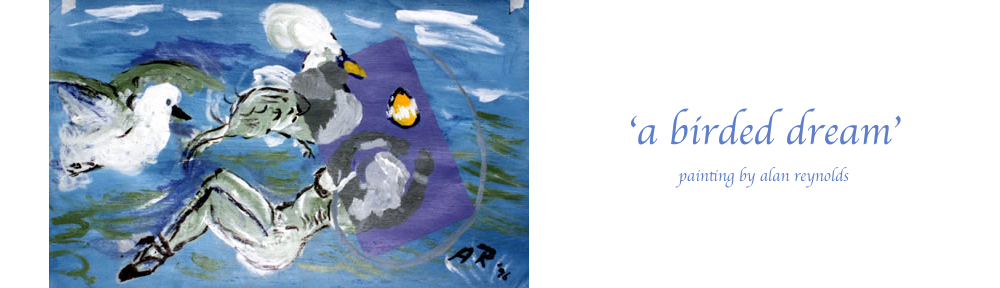
A Short Piece

Of the night sleeps I remember none are short
as this one, stopping on the second line
of counting sheep to stare into the dark.
Outside, a baby’s screaming like a cat.
I pretend it is the other way around
and blank out themes I wrestled with in ‘Piece Work.’

One’s killing to save peace. It only works
for spans of time that are extremely short.
A chamber of the sort that takes a round
expels a load that tracks a laser line
from a man I’d called my neighbor towards the cat.
My eyes trace glaring red-blacks through the dark

into the trees. The morning starts off dark
and worsens with each step I walk to work.
On a tree I see a poster for a cat:
a child is missing. There’s another short
note penned below it: felt-tip single line
that the cat and child no longer are around.

My partner in our workplace shuns my round
of questions. Answers leave us in the dark
as they must for now; we only have the line
we gave each other when we came to work.
The lines of customers grow thin and short
and thinking comes in quietly as a cat.

We two, who once were proud of how we’d cat
around, when times were easy, have come round
to valuing what’s important now we’re short
of options, and we rage against the dark
together, as if rhetoric could work
a miracle. We want a party line.

‘Peace at all costs’ and ‘Do not cross this line’
compete, and we consider if the cat
survives its boxing; we ask whether work
will be an option if bad forces round
upon us and extinguish peace. The dark
unites us and cuts hopes and whining short.

We load our weapons for the coming round
of vigilance, hold lines against the dark,
and think our war successful. Peace is short.
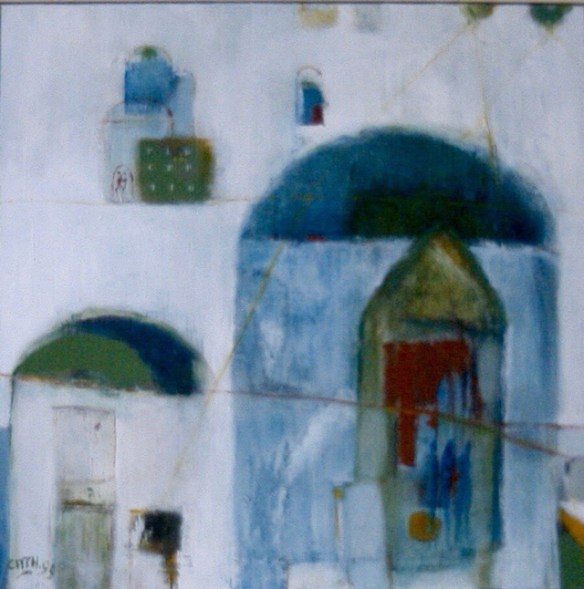
Child Armies

I am not well. My soul’s not dead but sick.
It cries for leeches; bloating, would be bled,
or freed in modern fashion from the toll
extracted here by Caesar’s rule; and there
by children scratching at the scabs they grow,
or would, would warlords let them once just be.

These children! They should sit in school or be
away at summer camps: get cramps, feel sick
a bit from biting melons that still grow
along the edge of fields. (When these fields bled
young brother’s blood filled up that ditch, and there
lay sister’s hand, she’s eight years old: the toll

of yet another spat.) These days the toll
of burial bells rings every noon, let be
at dawn, at dusk, at night. And over there,
across the cove on neighbors’ ground, the sick
hunch down: they’re scratching out the stumps of bled
and blasted fruit trees blown away. Here grow

no more the shady tops and trunks. Here grow
instead cracked rocks, some not tilled crops. The toll
among the children’s even worse. Who bled
their eyes of tears, daubed out where there should be
a sparkling glint of healthy fun? Eyes sick
and cynical: lies Lucifer in there,

where babies harbored happiness? It’s there,
among these baby brawler minds we grow
(yes, “we”) as fodder for a farce more sick
than serious or grand, I hear the toll
of hope’s demise, of what these tots could be.
Their bodies grow in spite of us (who bled

resources, poisoned what was left; who bled
these children’s humanness away). Is there
no place they can retreat, no crèche to be
created in once more, and, cuddled, grow
in graciousness, avoid the warrior’s toll
that levies suffocation, makes them sick?

These children warriors we have bred are sick.
Beheading them lets us postpone the toll
that nature wants as populations grow.

Mimosa

Three roles, all different facets in one person who exists only really as dialogues in himself: Maarten the Muser; Renaldo the Reactor; and Chorus, a trio of ornery kids he might have been or be becoming, circumstances permitting.

As the stage lights come up Maarten stands to the left. Renaldo sits looking at his hands. The three Chorus members stand on the proscenium wearing short trousers, silver masks, and silver-tipped tap shoes that they stamp as they shout each beat of their Chorus lines accompanied by drums and sheet lightning.

Mimosa

Maarten: Where go our thoughts when we loose them?
Renaldo: Who is bothered?
Chorus : We all are!

Maarten: Would thoughts lose their hues should we find them?
Renaldo: They’re hewed lower.
Chorus : Renaldo!

Maarten: Richer than music, thoughts come back
Renaldo: I’m atwitter.
Chorus : He’s solo!

Maarten: like sun in a clear stream remembered:
Renaldo: I could bridge it.
Chorus : A cards pro!

Maarten: walking to very first school day
Renaldo: On the boardwalk!
Chorus : No dunce, so!

Maarten: with biscuits she made for my pleasure.
Renaldo: So delicious.
Chorus : From best dough!

Maarten: Box lunches we lost in the shadows
Renaldo: I still miss them.
Chorus : Helped birds grow!

Maarten: when she stood much taller than I did
Renaldo: How I loved her.
Chorus : We all go!

Maarten: mimosa trees that I could climb then
Renaldo: Hid from brother.
Chorus : No help though!

Maarten: were cut down much later and bundled.
Renaldo: They had blighted.
Chorus : Ebbing flow!

Maarten: Found under dikes from my childhood,
Renaldo: Were they planted?
Chorus : We can’t know!

Maarten: they loosen emotion this evening.
Renaldo: Who is bothered?
Chorus : We all are!

Fine Night Music

We’re dancing slow.  I hope the music never stops.
The steps you executed on the stage
are muted here with me, just subtle hops
the others hardly see.  You’ll be the rage
of critics who reviewed your play tonight.
But in this brown Café your pas de deux
blends fine with mine.  Times like this I love you.

You’re back so life is grand.  Please just hold me.
Your back against my hand is warm and strong;
the exercises work.  You look eighteen
but years more interesting.  It was wrong
to separate.  I’m still not right.
But in this brown Café your pas de deux
blends fine with mine.  Times like this I love you.

I know this city’s music, how its notes
attract us dancers, make us want it all.
It’s your turn on the high wire.  Jostling boats
of patrons call you.  They’re your fans.  Don’t fall.
But in this brown Café your pas de deux
blends fine with mine.  Times like this I love you.

Perception

Perceptions of the current, while they count,
contribute less success than would a paddle.
We put our oars in, hoping they amount
to mastering the flood-swept log we straddle
while shouting out instructions neither hears

while the river of the universe cuts slack
and lets us breathe a little while we tumble
to where we realize we can’t turn back,
and beyond the rapids’ roar we hear the rumble
of a waterfall that drops a million years.

I ship my oars and you throw yours away.
You turn around.  The sun makes you resemble
the girl you were our second wedding day.
Returning recognition makes us tremble
and the freedom of the hopeless lights our eyes.

We each slip toward each other, taking care
to keep our log from twirling while approaching
the eternal falls, and, when we’re almost there,
you lean and kiss me just when we are broaching
and The Us takes flight while something lesser dies.

This poem was inspired by Catharina Reynolds’ painting ‘Perception’. The poem and painting were featured with accompanying music on Judy Labriola’s website ‘Euphoria‘.

Cloud Stream Fog Morning

Child waves
from car ahead.
She knows me then. Do I?
Who hangs here locked away behind
my eyes?

My eyes
see pain, chilled rain,
last waves, your laughed-at plans —
yet never look with any sense
at me.

Gray chill.
Men’s eyes cast down,
hands tending bending rods.
Cloud Stream hides golden fish as old
as God.

What are
these dire dead sounds
in dense fog near my head?
Youth dreams that toll away? My screams?
They go.


Cloud Stream Fog Morning appeared in March 1996 on the Aha!Poetry website and is still there.

Snake Eyes in Ireland

Saint Patrick, the only man to see green snakes
in Ireland where no serpent ever slid,
would screech ‘Hiss off’ at christenings and wakes
until the Pope sent envoys to forbid
the use of Irish whiskey where he preached.

He got religious orders and a miter on his hat
and drove away the snakes that would have reached
green Eire. He gave his whiskey to the cat.

When Irish eyes are smiling, the English say it’s drink
but tonight it’s ‘Up the Irish’ and it’s ‘Irish rule OK’
and I am not the only one who sees The Serpent wink.

It will be another year until Saint Patrick’s day
so dance while dram and Guinness pint are drawn
and mind your step. Don’t squelch that leprechaun.

Occam, let us adorn it

I think that I will never see
the point of tarting up a tree
too small to bless me with some shade
or fruit to press for lemonade.

A tree so minuscule to need
protection when the dachshund peed.

A tree if by a marmot climbed
would break and let him get enslimed
in mud dug up among its roots
by truffle-hunting bandicoots.

A tree attributed to chaps
who’ll stew a spaniel if it naps.

A bonsai tree whose fairy size
is meant some say to maximize
the egos of our human race
that loses little losing face.

A tree as large as broccoli stumps;
a sort of mushroom with the mumps.

A tree whose lumber would if pressed
fail to provide one decent chest.

Enfin a tree too small for me
to eulogize. A flimflam tree.